Date: 20th August 2026
Case No: HC (TAB) 2972/21
Court: Special Permanent Three-Judge High Court (Trial-at-Bar)
Venue: Special Permanent Three-Judge High Court (Trial-at-Bar), 2nd Floor, MCC Building, Adhikarana Mawatha, Colombo 12.
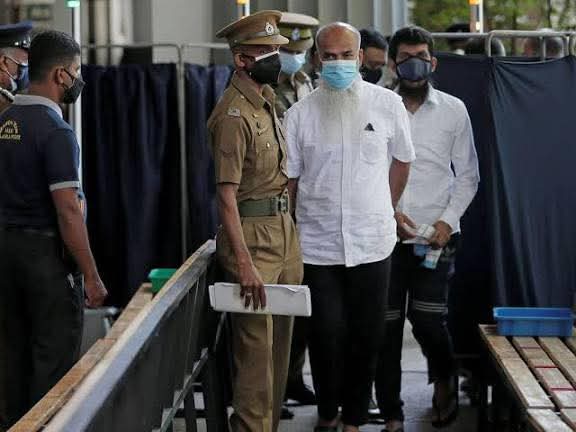
The case was taken up before the Trial-at-Bar with all accused present, except the 17th accused, who had passed away. The 1st, 2nd, 7th, 8th, 10th, 15th, 17th, 18th, and 19th accused were represented by Mr. Kaneel Maddumage, AAL. The 12th and 13th accused were represented by Mr. Ravindu Yasas, AAL. The 20th to 25th accused were represented by Mr. Mayuran Mahalingam AAL under the instructions of Mr. Sanjeewa Ruwanpathirana, AAL The 1st, 3rd, 4th, 5th, 6th, 9th, 11th, 14th, and 16th accused appeared in person
The 4th Accused gave his dock statement and primarily challenged the credibility and independence of the prosecution witnesses and the reliability of the documentary evidence relied upon against him. He particularly questioned the evidence of Anas, Jaufer Sadiq, Munshif and Asmiya. He pointed out that Jaufer Sadiq, Munshif and Asmiya had been kept at the CID for a considerable period and were released after it was determined that they had not committed offences, although statements under Section 127 of the Criminal Procedure Code had been recorded from them. In contrast, he stated that Anas had allegedly admitted to committing offences and destroying documents but was not arrested. Instead, Anas remained with the CID, assisted investigators, prepared material and translated documents. The 4th Accused therefore argued that Anas had been influenced or prepared by the CID and was not an independent witness. He also challenged the authenticity of his alleged statement taken under Section 16(1) of the PTA which was subsequently marked as P-183, particularly the signature, which he claimed was not his. He further relied on contradictions between P-183 and Munshif’s oral evidence concerning whether the 4th accused had been sent by Munshif to abroad for weapons training or 4th accused had gone abroad for self-defence training. He pointed out further inconsistencies regarding religious programmes, weapons training and alleged lectures in Kandy, arguing that the different versions given by Anas and police officers demonstrated that the prosecution evidence was unreliable.
The 4th Accused also explained the circumstances concerning Rilwan, the brother of Saharan, whose hospital admission documents were marked P-876. He admitted signing the hospital admission document and assisting Rilwan but maintained that he had acted purely on humanitarian grounds. He argued that, although the doctor later became suspicious after observing pieces of lead in Rilwan’s eyes, the doctor did not inform the police. The 4th Accused stated that he genuinely believed Rilwan had suffered a gas-related accident and therefore wrote that no police investigation was necessary. He argued that his conduct was inconsistent with criminal involvement because he had openly signed the hospital document and voluntarily provided his identity detailed. He also complained about the treatment of his family members by the Mawanella Police and denied allegations that he and his brother had attempted to escape when arrested. Referring to an earlier Kegalle High Court case where he had pleaded guilty because he accepted responsibility, he stated that his refusal to plead guilty in the present case demonstrated that he genuinely maintained his innocence. He ultimately submitted that the prosecution had failed to establish his guilt and sought an acquittal.
Giving the dock statement the 5th Accused denied any involvement in planning, facilitating, aiding or assisting the Easter Sunday attacks. He provided details of his educational background and stated that he had completed his G.C.E. Advanced Level examination and a Diploma in Human Resource Management at NIBM. He also referred to his participation in rugby and football. His principal argument was that there was no reliable evidence connecting him with the suicide bombers or the attacks. Regarding the motorcycle incident, he denied being responsible and questioned the circumstances surrounding the explosion, particularly because it occurred near a security forces camp. He referred to information concerning an Army officer who had subsequently been arrested and argued that these circumstances created doubt regarding the prosecution’s attempt to connect him to the incident. He also denied allegations concerning his arrest and the alleged attempt to escape. The 5th Accused further challenged the prosecution’s failure to call material witnesses. He pointed out that the CID officer who allegedly took custody of productions recovered from him and his brother had not been called, and that the person to whom the relevant police curfew permit had been issued by the Mahiyanganaya Police had also not testified. He argued that these omissions weakened the prosecution’s evidence concerning the recovery of productions and his movements. He also challenged the authenticity of his alleged statement taken under 127, which was subsequently marked as P-170. Although he accepted that the documents showed that he had purchased and later sold a motorcycle, he pointed out that they did not establish which is the bearing number of the motorcycle allegedly connected with the offences. Therefore, he argued that the prosecution had failed to establish that the motorcycle referred to in those documents was the same motorcycle connected to the alleged attack. He further maintained that there was no evidence showing that he had conspired with, aided or abetted any person named in the First Charge or identified any target or location for a bombing. The 5th Accused also challenged the video recording involving Saharan and the digital evidence obtained from the suicide bombers. He stated that none of the accused persons was visible in the video apart from the suicide bombers themselves and maintained that the pen drives belonging to the suicide bombers did not establish his involvement. Like the 4th Accused, he strongly attacked the credibility of Anas, arguing that Anas had remained with the CID for a considerable period, prepared material for the Ministry of Defence and assisted the CID in translating statements. He therefore claimed that Anas had been influenced or prepared by the investigators and that his evidence should not be relied upon. The 5th Accused ultimately maintained that there was no credible evidence linking him to the planning, preparation, aiding, abetting or execution of the suicide bombings and requested an acquittal.
In his dock statement the 9th Accused categorically denied all charges and explained his educational background, stating that he had completed a Bachelor of Arts degree in Arabic Language and Islamic Studies and had commenced a further degree in English. He stated that he was arrested at a hotel in Dambulla while in the third year of his studies. During his remand period, he commenced an LL.B. at the Open University and stated that he achieved 336 out of 400 marks in his first year. He also relied on Islamic teachings prohibiting suicide as part of his denial of involvement in the attacks.
A major part of the 9th Accused’s defence concerned the alleged Section 16(1) PTA statement marked L-1. He challenged its authenticity and reliability by referring to the evidence of ASP Nihal Jayathilaka, who stated that he obtained the statement and corrected Sinhala typing errors. The 9th Accused pointed out that even his parents’ names had been incorrectly recorded and argued that such basic errors would naturally have been corrected by him if he had genuinely reviewed and made the statement. He therefore questioned the manner in which the document had been prepared and corrected. He also denied ever using the name “Abu Naja”, stating that Anas had confirmed that he was not known by that name and that the Shura Council document did not identify him as Abu Naja. The 9th Accused further denied ever travelling to or visiting Wanathavilluwa. He also denied being present at the Enderamulla house. In relation to the recorn box recovered from Enderamulla, on which fingerprints allegedly belonging to him were found, he questioned the evidential significance of the fingerprint evidence. He argued that the prosecution had not sufficiently established the circumstances in which the fingerprints came to be present. He also pointed out that Enderamulla had not been included in the indictment in the manner in which the prosecution sought to rely upon the location. He referred to the evidence of the neighbour, Anne Chamini, who had not identified him, and challenged the allegation that he had tought to children at the house. His position was that the mere existence of alleged fingerprints, without satisfactory evidence establishing the context and significance of those fingerprints, could not establish his participation in the alleged offences. He similarly challenged the allegation that he had accompanied the 5th Accused when purchasing a motorcycle. He stated that the motorcycle shop owner had not identified him. He therefore argued that the motorcycle allegation had not been properly established. More broadly, he raised concerns regarding the manner in which statements were obtained from persons detained under the Prevention of Terrorism Act. He argued that persons in police custody could potentially be subjected to pressure, promises or inducements when statements were being recorded. He referred to wider human-rights concerns surrounding PTA confessions and maintained that statements obtained in such circumstances should be approached with particular caution before being relied upon as evidence of guilt. Finally, the 9th Accused questioned the completeness and scope of the investigation into the Easter Sunday attacks. He referred to media reports concerning other individuals, including Suresh Saleh and the former President Gotabaya Rajapaksa, and relied on these matters to question whether the investigation had comprehensively examined all individuals and circumstances potentially connected to the attacks. He expressed concern that the present case was being brought towards conclusion while, according to his understanding, investigations concerning other individuals were allegedly continuing. He used this circumstance to support his broader argument that the prosecution had not presented a complete account of the events or adequately investigated all possible avenues. The 9th Accused maintained that the prosecution evidence was unreliable, inconsistent or insufficient to establish his participation in the alleged offences and accordingly requested the Court to acquit him of all charges.
The dock statements of all the accused were concluded. On the following day, 21 August 2026 at 10.00 a.m., the Court will commence calling the witnesses on behalf of the 1st and 2nd Accused.